L´HERBIER ENCHANTÉ
En botánica, un herbario (del latín herbarium ) es una colección de plantas acompañadas de información detallada sobre las mismas para su estudio. El Códice de Discórides, fue el primer herbario que conocemos, realizado en el año 512, en Constantinopla, para la hija del emperador. Luego, durante la Edad Media, los herbarios describían e ilustraban preferentemente plantas medicinales. Hasta la llegada de la imprenta en el siglo XV, fueron los monjes en los monasterios, quienes se ocuparon de reproducir y preservar los escritos heredados por occidente añadiendo bellas ilustraciones coloreadas. Esta tarea de codificación, realizada por los sucesivos copistas presentaba distorsiones, omisiones y confusiones intencionales o involuntarias que alteraron los textos originales. En 1551 el profesor de botánica Luca Ghini realizo el primer herbario moderno pegando plantas desecadas sobre papel para su conservación inaugurando las futuras grandes expediciones botánicas a territorios desconocidos para recolectar especies nuevas para Europa. Actualmente, existen miles de herbarios a lo largo del mundo entero que conservan notables colecciones botánicas, un valioso material de investigación e información que nos acerca al mundo natural que nos rodea
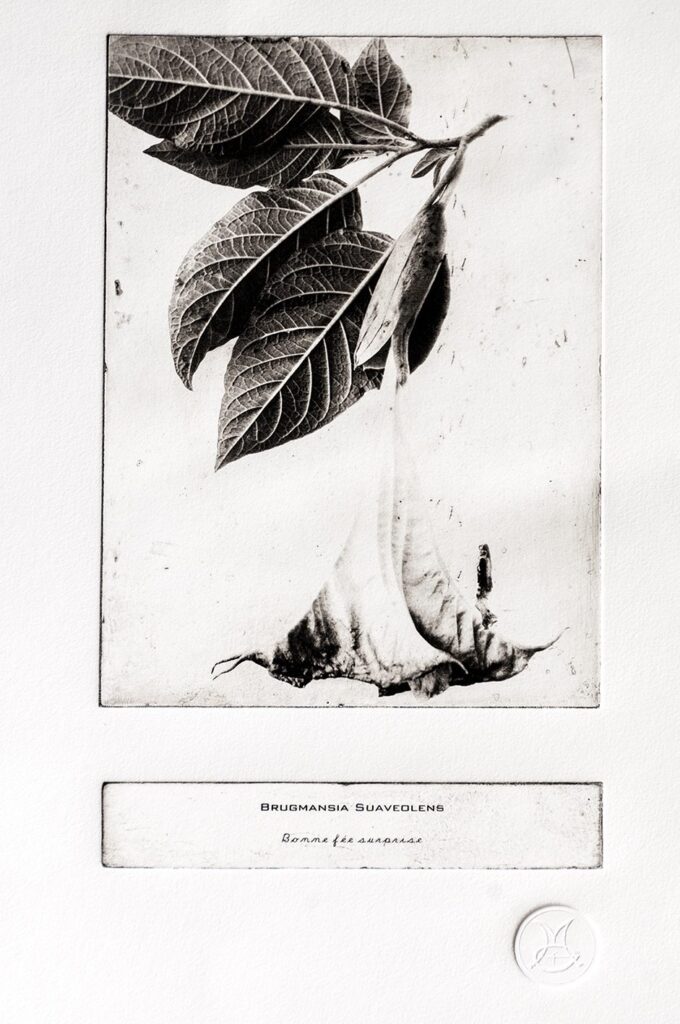
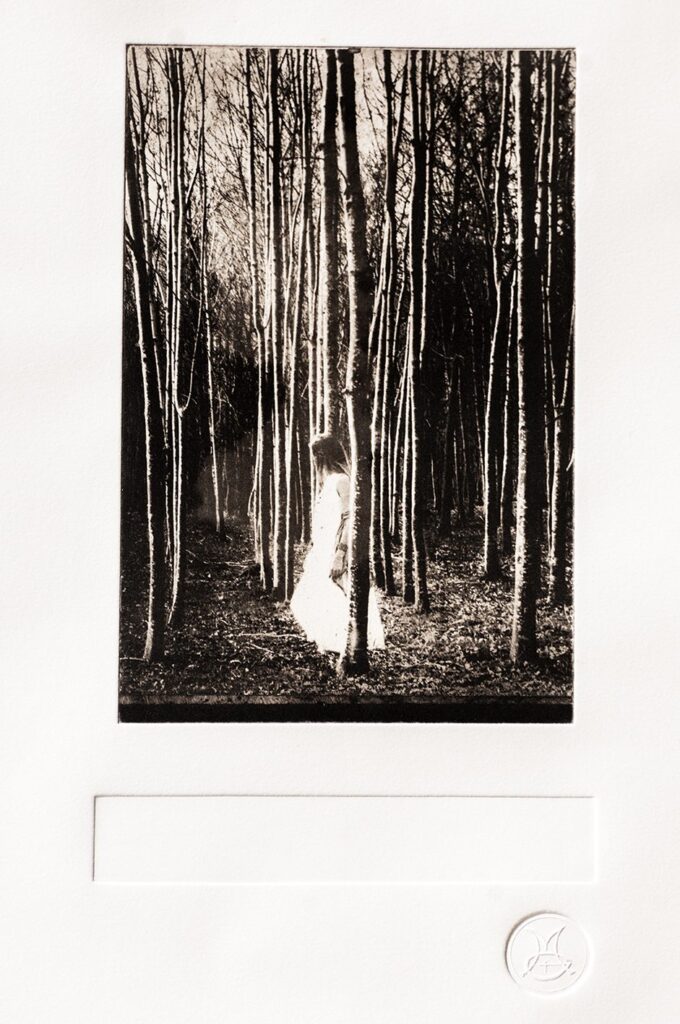
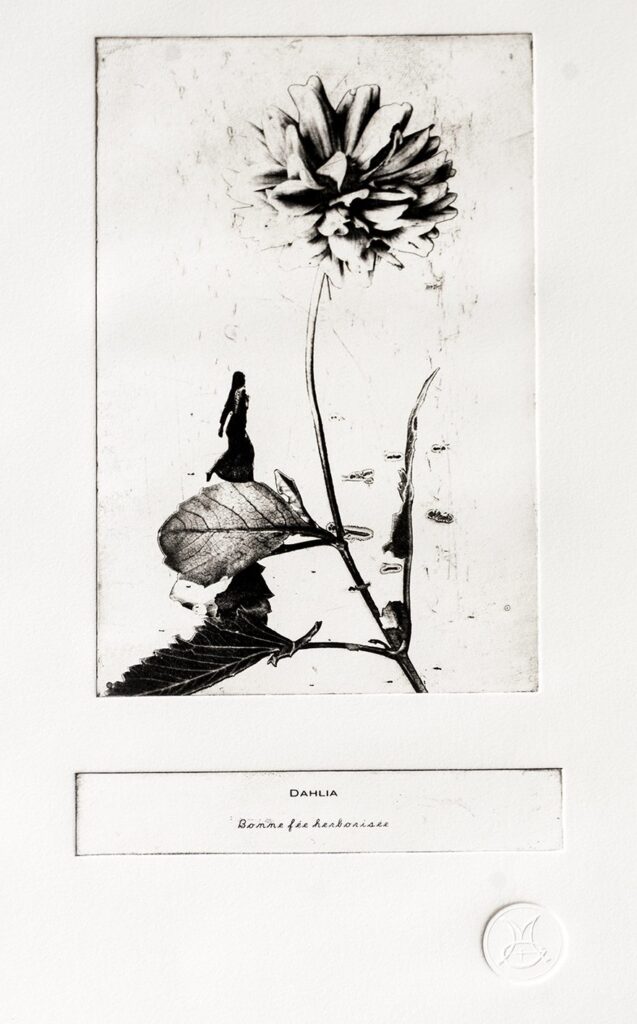
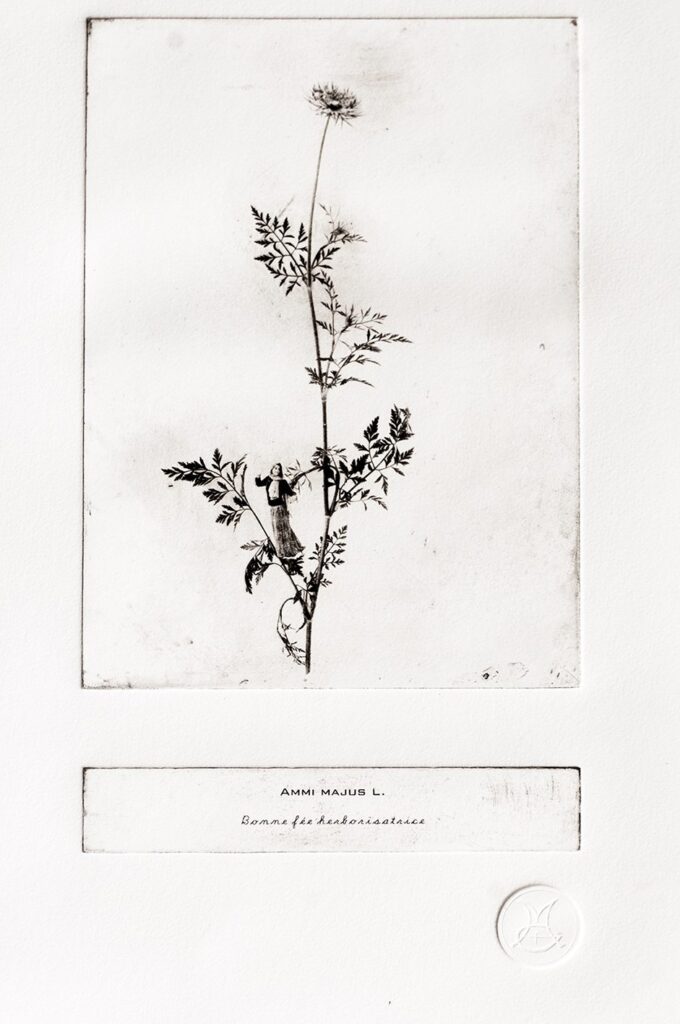
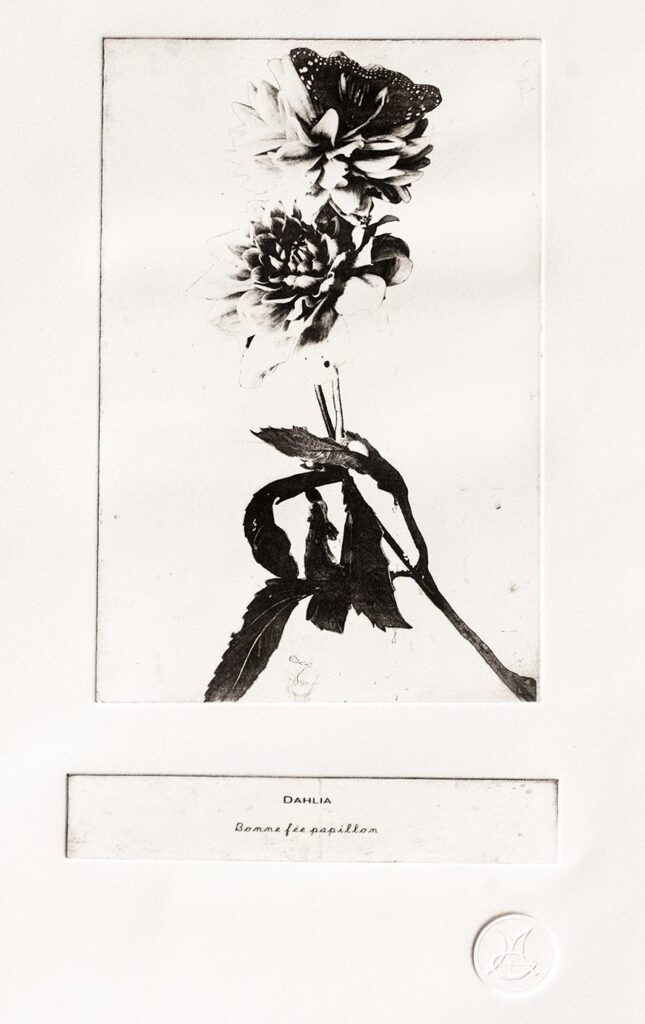
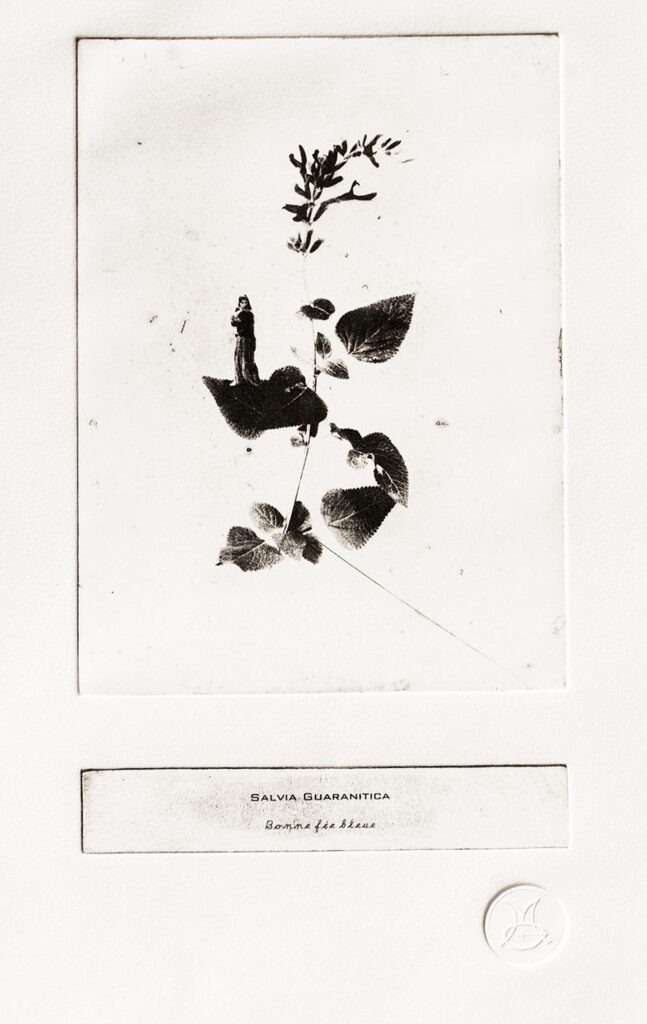
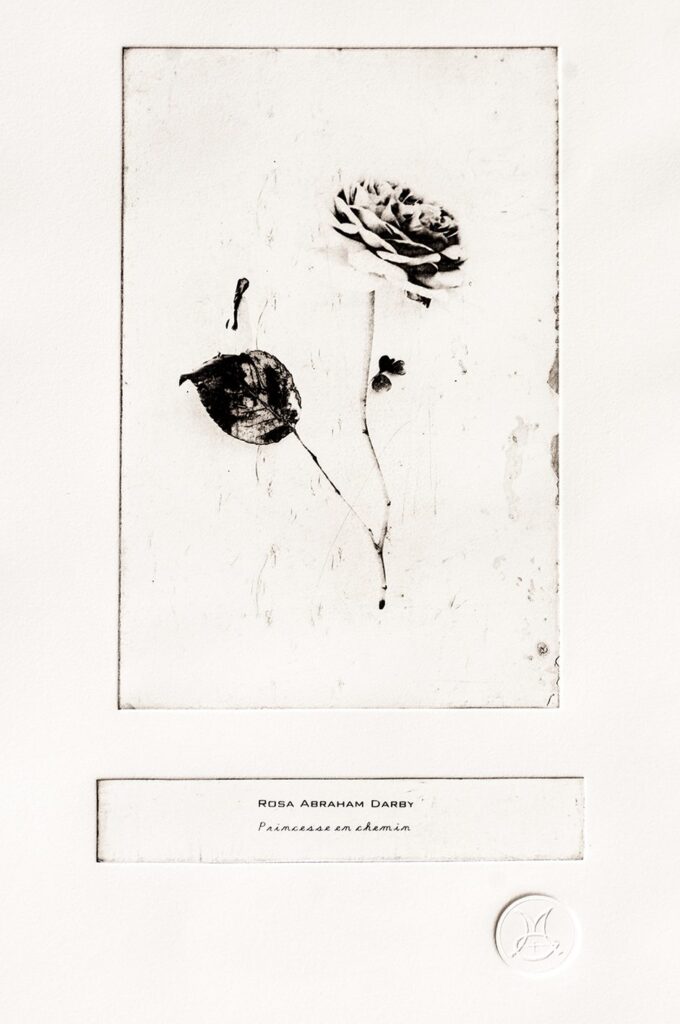
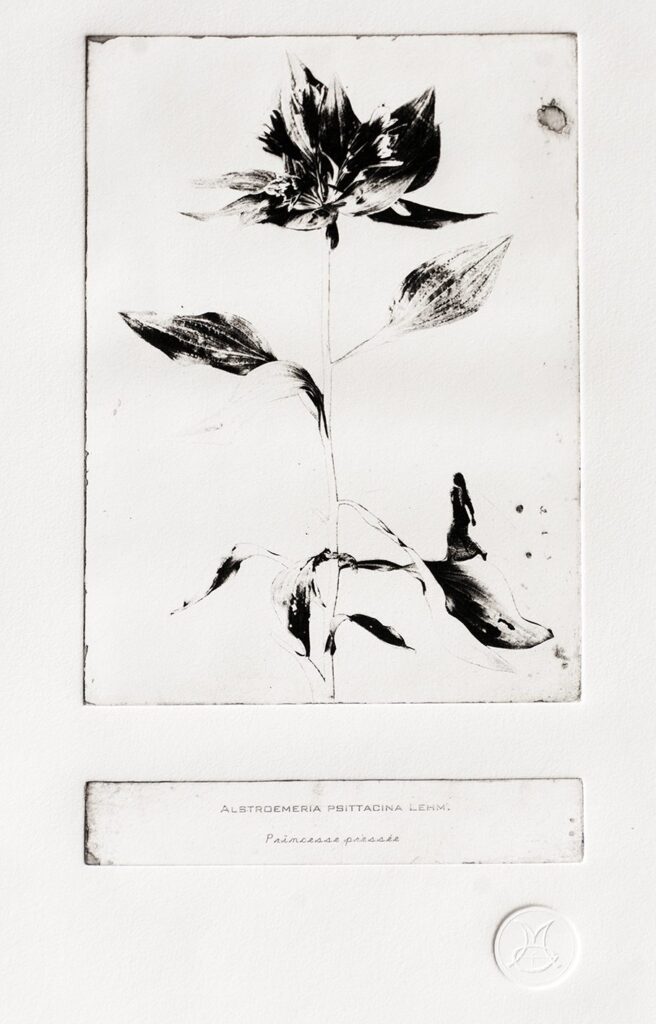
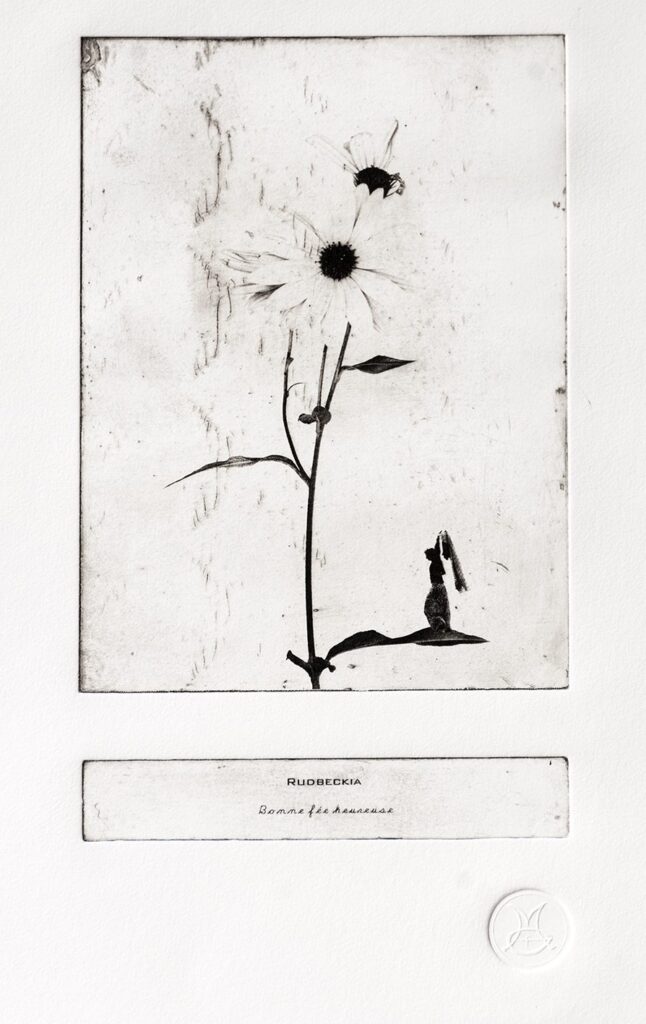
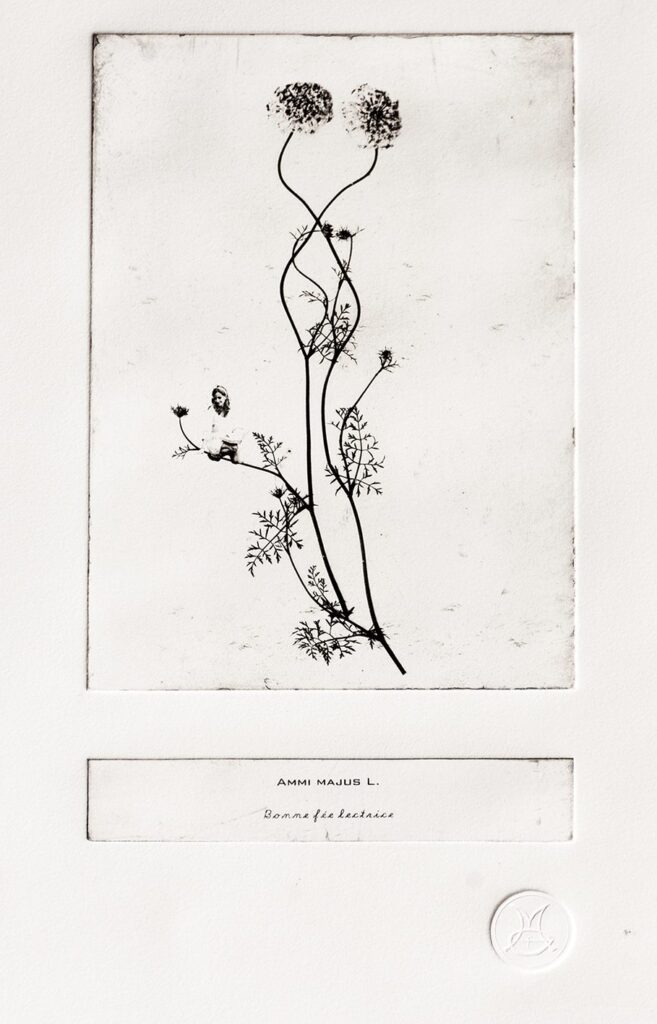
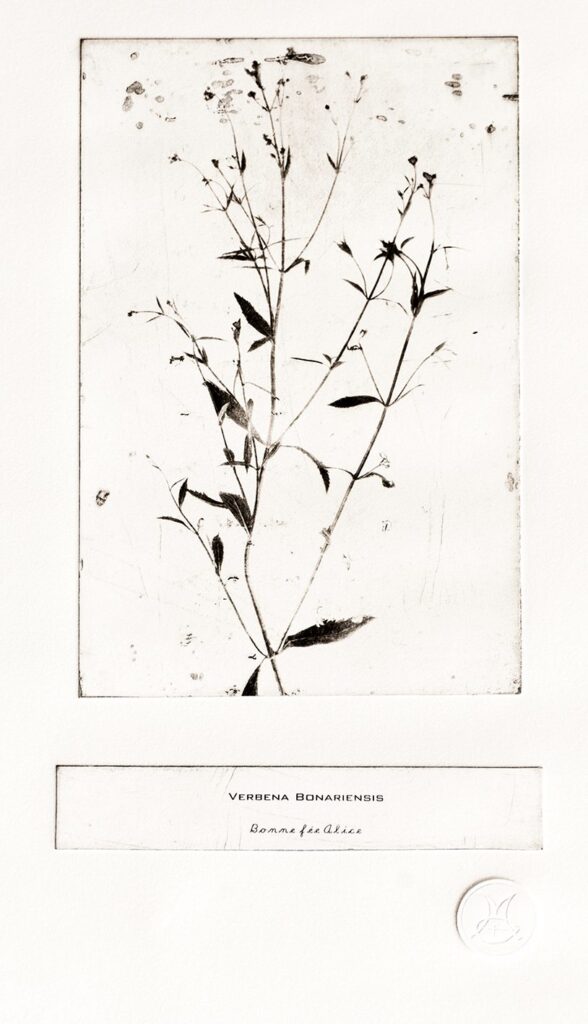
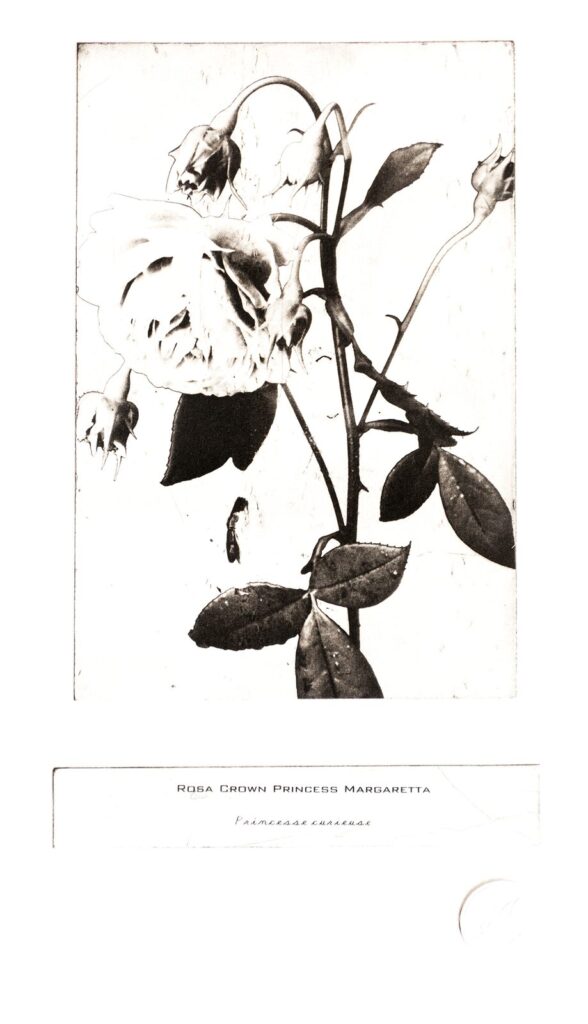
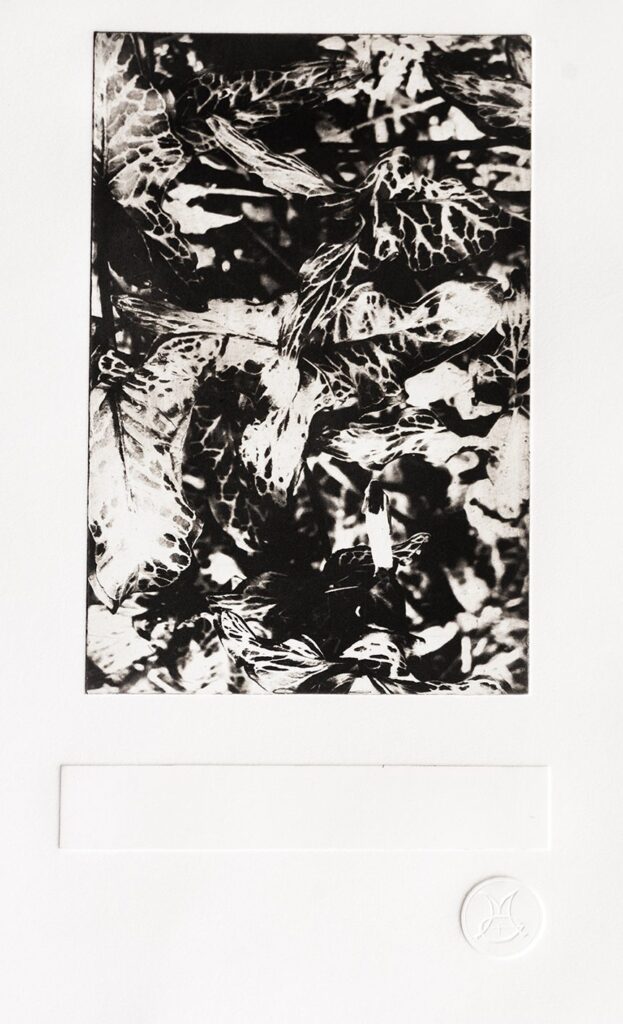
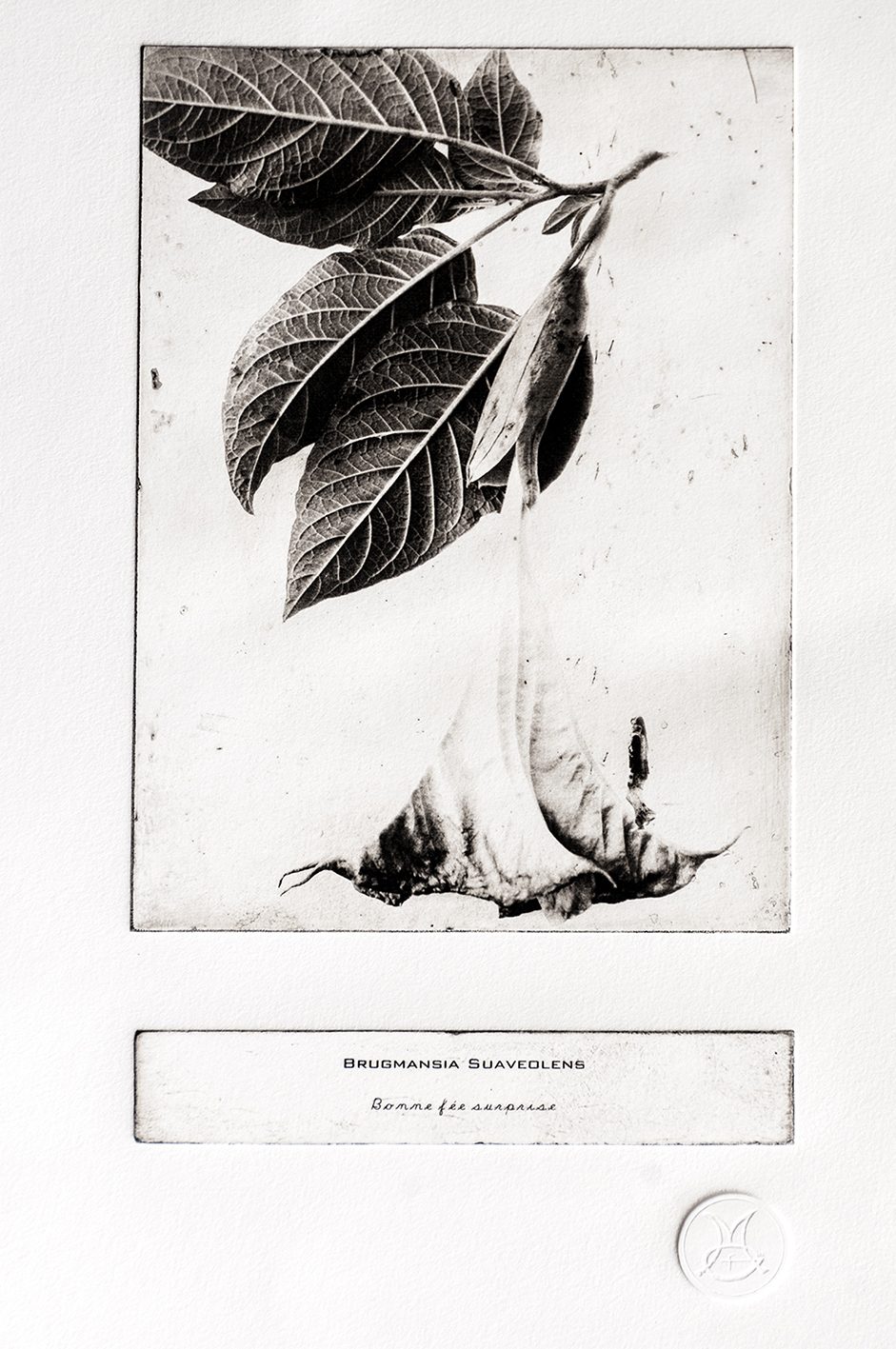
Hace un tiempo, descubrí unos grabados que se cree pertenecen al “Hortus Sanitatis” del Dr.Johannes Wonnecken von Cube, de 1485. Siempre interesada en la flora, e inspirada en dichos descubrimientos antiguos, realicé este herbario de las especies que habitan en mi jardín. Pero sucedió algo curioso, en las estampas, aparecieron algunas imágenes misteriosas, que no eran visibles en las originales. Serie de 13 estampas de grabado, realizada en Intaglio Type, en papel Arches BFK Rives. Edición 5/5, medidas 56 cm x 38 cm, 2015.
Esta Serie fue presentada en La Maison Verte del Jardin Botanique de Marnay-sur-Seine durante la residencia realizada en el año 2015.
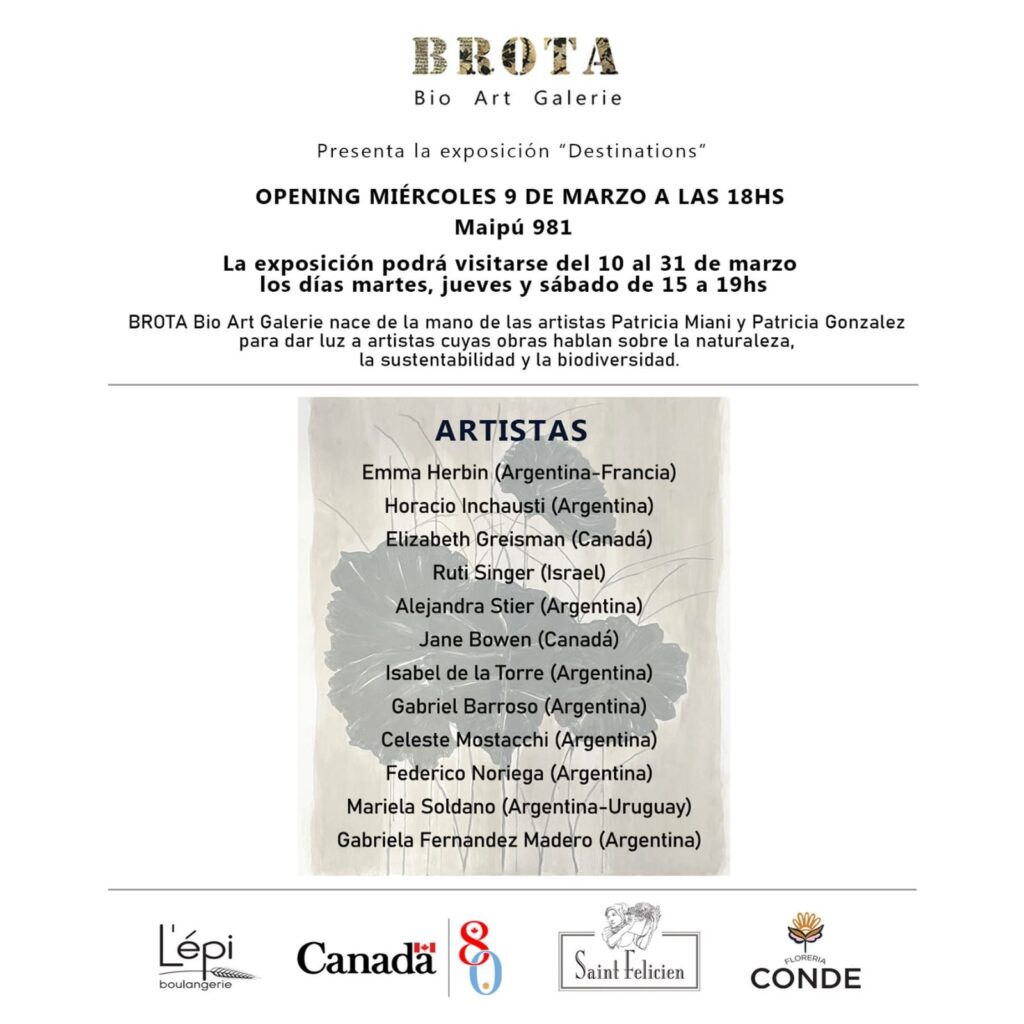
Tambien fue exhibida en Brota Bio Art Galerie durante la exposición “Destinations” en Caba, Argentina, 2022.
L ́HERBIER ENCHANTÉ
In botany, a herbarium (from the Latin *herbarium*) is a collection of plants accompanied by detailed information about them for study. The *Codex of Dioscorides* was the first herbarium we know of, produced in the year 512 in Constantinople for the emperor’s daughter. Later, during the Middle Ages, herbariums primarily described and illustrated medicinal plants. Until the arrival of the printing press in the 15th century, monks in monasteries were responsible for reproducing and preserving the writings inherited by the West, adding beautiful colored illustrations. This task of transcription, carried out by successive copyists, introduced distortions, omissions, and intentional or unintentional confusions that altered the original texts. In 1551, the botany professor Luca Ghini created the first modern herbarium by gluing dried plants onto paper for preservation, inaugurating the future great botanical expeditions to unknown territories to collect new species for Europe. Today, there are thousands of herbaria throughout the world that preserve remarkable botanical collections, a valuable body of research and information that brings us closer to the natural world around us.
Some time ago, I discovered some engravings believed to belong to the *Hortus Sanitatis* by Dr. Johannes Wonnecken von Cube, from 1485. Always interested in flora, and inspired by these ancient discoveries, I created this herbarium of the species that inhabit my garden. But something curious happened: in the prints, some mysterious images appeared that were not visible in the originals. Series of 13 engraved prints, made in Intaglio Type, on Arches BFK Rives paper. Edition 5/5, dimensions 56 cm x 38 cm, 2015.
This series was presented at La Maison Verte of the Jardin Botanique de Marnay-sur-Seine during the residency carried out in 2015.
It was also exhibited at Brota Bio Art Galerie during the exhibition “Destinations” in CABA, Argentina, 2022.
L’HERBIER ENCHANTÉ
En botanique, un herbier (du latin herbarium) est une collection de plantes accompagnées d’informations détaillées sur celles-ci afin de permettre leur étude. Le Codex de Dioscoride fut le premier herbier connu, réalisé en 512 à Constantinople pour la fille de l’empereur. Par la suite, au Moyen Âge, les herbiers décrivaient et illustraient principalement des plantes médicinales. Jusqu’à l’arrivée de l’imprimerie au XVe siècle, ce sont les moines des monastères qui se sont chargés de reproduire et de préserver les écrits hérités de l’Occident, en y ajoutant de belles illustrations colorées. Ce travail de codification, réalisé par des copistes successifs, présentait des distorsions, des omissions et des confusions intentionnelles ou involontaires qui ont modifié les textes originaux. En 1551, le professeur de botanique Luca Ghini réalisa le premier herbier moderne en collant des plantes séchées sur papier pour leur conservation, inaugurant ainsi les grandes expéditions botaniques vers des territoires inconnus afin de collecter de nouvelles espèces pour l’Europe. Aujourd’hui, il existe des milliers d’herbiers à travers le monde qui conservent d’importantes collections botaniques, un précieux matériau de recherche et d’information qui nous rapproche du monde naturel qui nous entoure.
Il y a quelque temps, j’ai découvert des gravures que l’on pense appartenir au Hortus Sanitatis du Dr Johannes Wonnecken von Cube, daté de 1485. Toujours intéressée par la flore et inspirée par ces découvertes anciennes, j’ai réalisé cet herbier des espèces qui habitent mon jardin. Mais il s’est produit un phénomène curieux : dans les estampes sont apparues certaines images mystérieuses, qui n’étaient pas visibles dans les originaux.
Série de 13 estampes de gravure, réalisée en Intaglio Type, sur papier Arches BFK Rives. Édition 5/5, 56 x 38 cm, 2015.
Cette série a été présentée à La Maison Verte du Jardin Botanique de Marnay-sur-Seine lors de la résidence réalisée en 2015.
Elle a également été exposée à Brota Bio Art Galerie lors de l’exposition « Destinations », à Buenos Aires, Argentine, en 2022.